The Logistics Management Excel Template for Inventory Tracking streamlines the process of monitoring stock levels, shipments, and order statuses with ease. It offers customizable sheets that allow users to efficiently manage supply chain operations and reduce errors. This template enhances accuracy and productivity by consolidating inventory data into a clear, organized format.
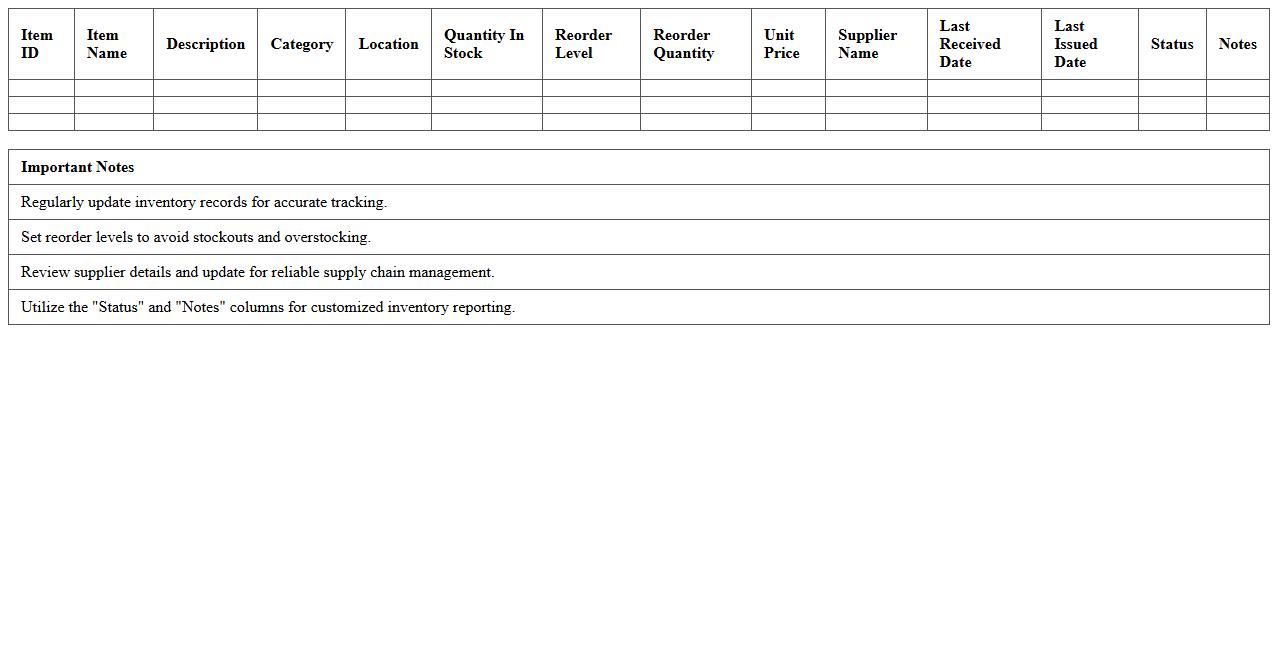
Warehouse Inventory Tracking Excel Template
The
Warehouse Inventory Tracking Excel Template document is a structured spreadsheet designed to help businesses efficiently monitor and manage stock levels, item locations, and inventory movements within a warehouse. It enables real-time tracking of quantities, reduces errors in stock management, and streamlines the replenishment process. By providing clear visibility into inventory status, it supports better decision-making and enhances overall operational productivity.
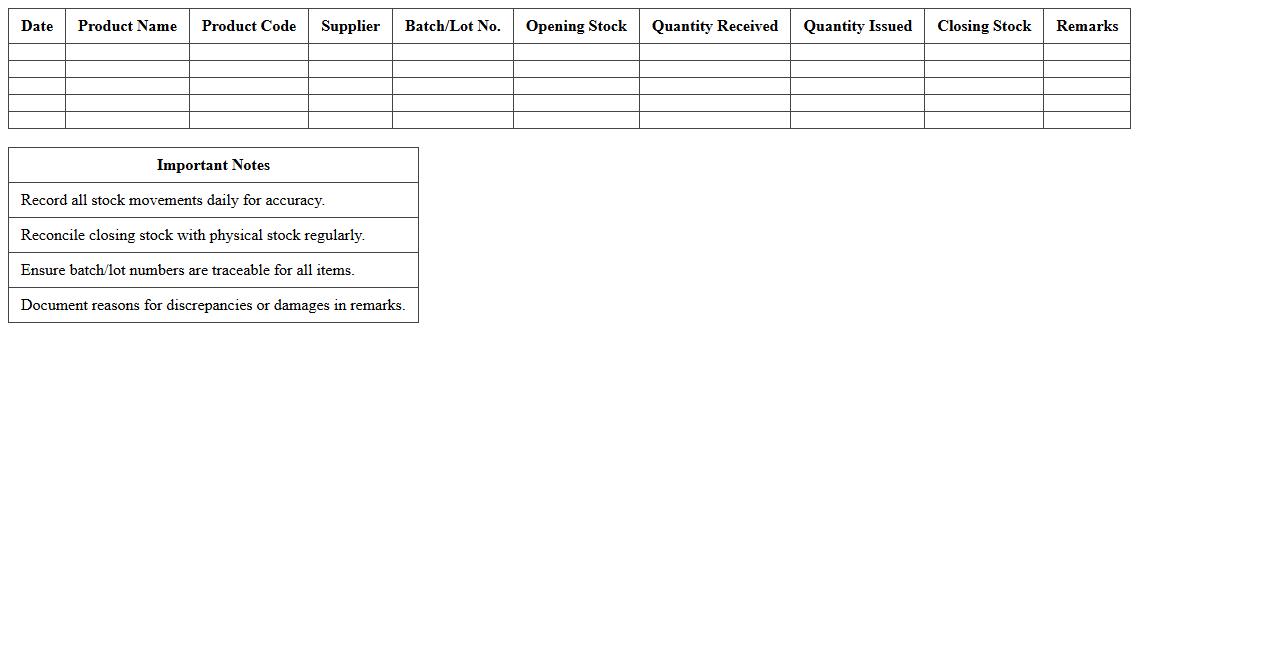
Supply Chain Stock Management Log Sheet
A
Supply Chain Stock Management Log Sheet is a detailed document used to track inventory levels, stock movements, and order status within the supply chain process. It helps businesses maintain accurate records of stock inflows and outflows, ensuring timely replenishment and preventing stockouts or overstock situations. This tool improves operational efficiency, enhances inventory accuracy, and supports data-driven decision-making for supply chain optimization.
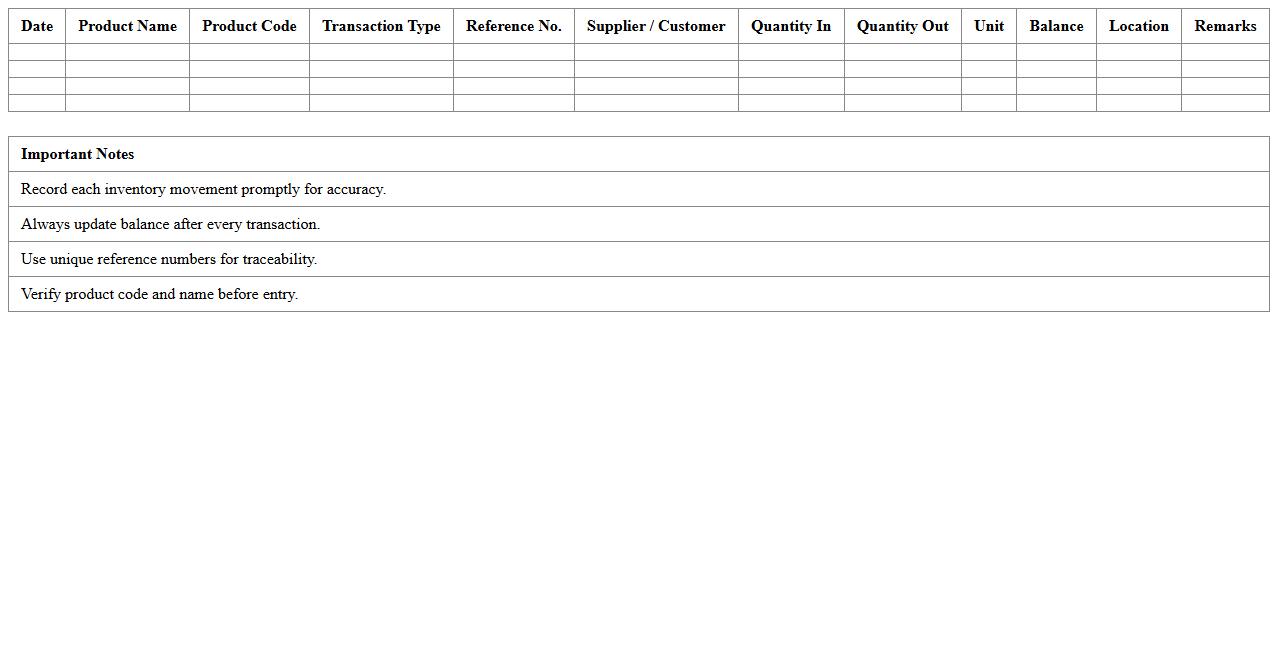
Product Inventory Movement Record Spreadsheet
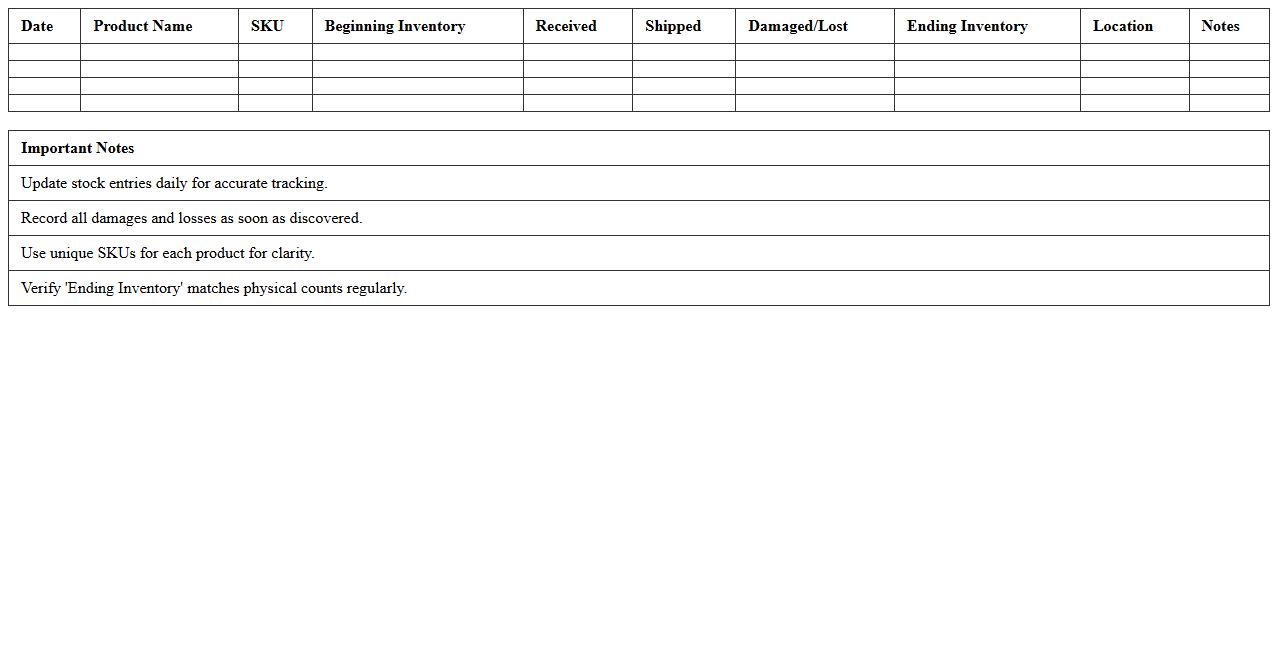
A
Product Inventory Movement Record Spreadsheet is a document that tracks the inflow and outflow of products within a warehouse or retail environment, detailing quantities, dates, and transaction types. This spreadsheet allows businesses to manage stock levels accurately, avoid overstocking or shortages, and streamline order fulfillment processes. By providing real-time insights into inventory shifts, it supports data-driven decision-making and operational efficiency.
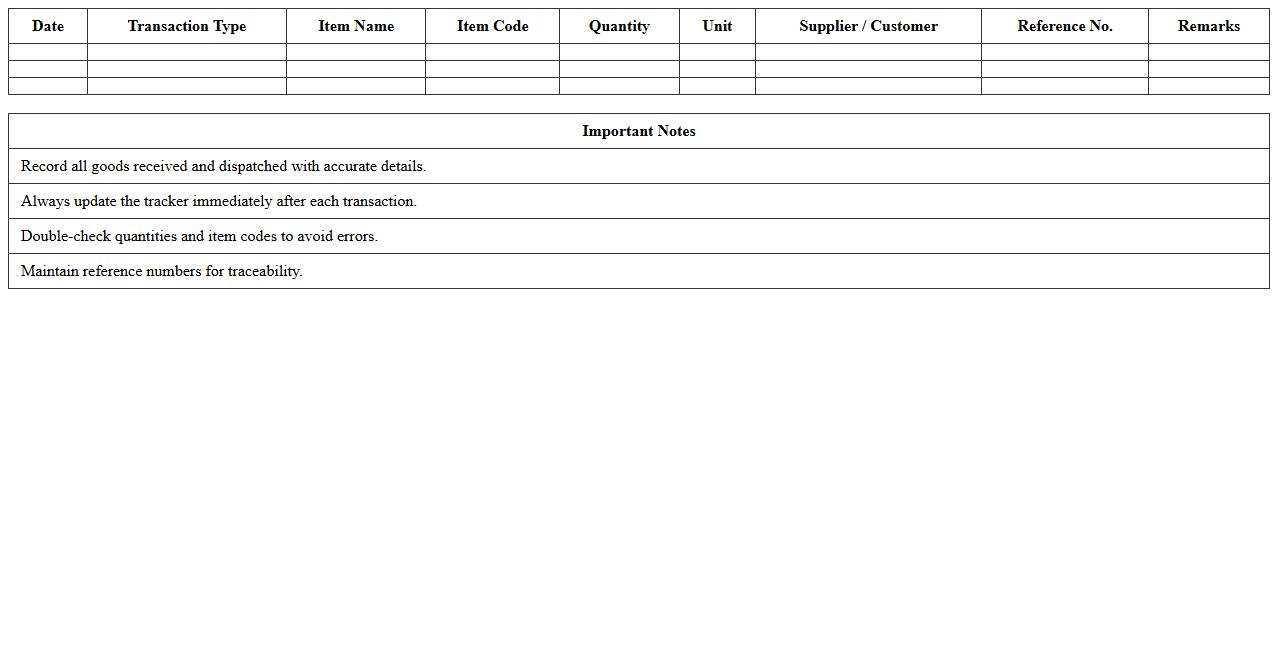
Incoming and Outgoing Goods Tracker Excel
The
Incoming and Outgoing Goods Tracker Excel document is a specialized spreadsheet designed to monitor and record the movement of inventory items entering and leaving a business. It provides real-time data on stock levels, shipment dates, quantities, and supplier or customer information, improving inventory accuracy and operational efficiency. Using this tracker helps businesses minimize stock discrepancies, streamline supply chain management, and make informed decisions based on comprehensive inventory insights.
Logistics Shipment Inventory Monitoring Template
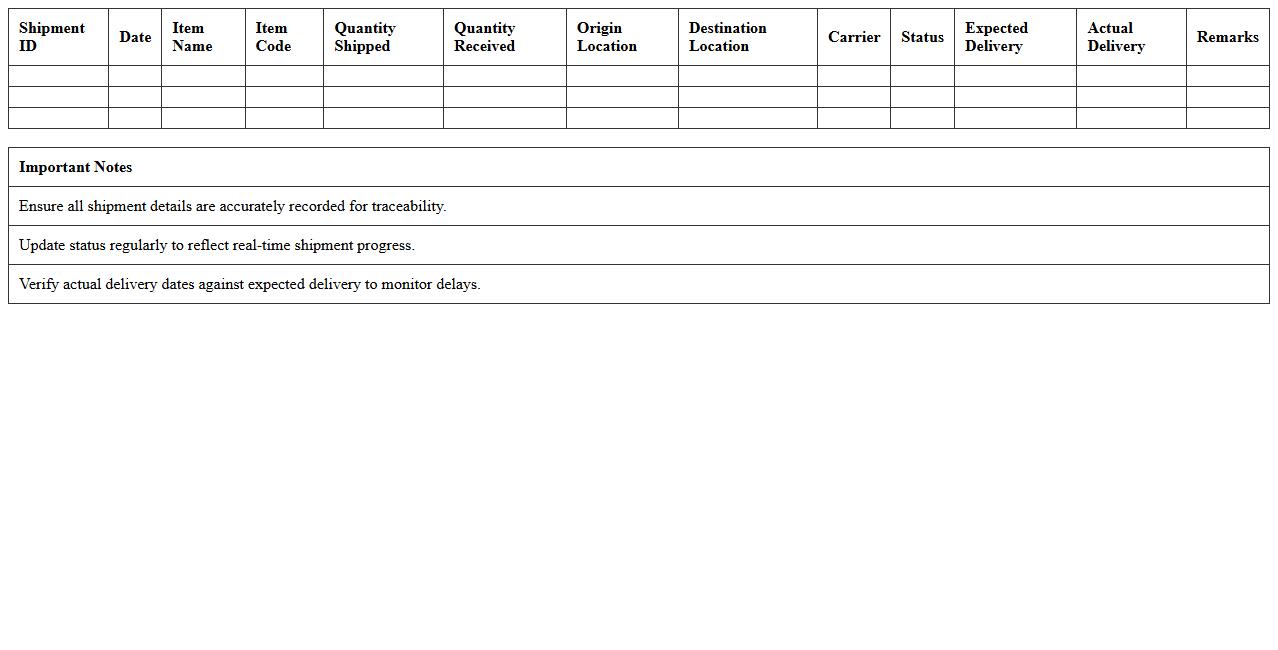
A
Logistics Shipment Inventory Monitoring Template document is a structured tool designed to track and manage the movement of goods through various stages of the supply chain. It helps businesses maintain accurate records of shipment statuses, inventory levels, and delivery timelines, improving efficiency and reducing errors. Using this template enhances decision-making by providing real-time data insights that optimize inventory control and streamline logistics operations.
Distribution Center Stock Tracking Sheet
A
Distribution Center Stock Tracking Sheet is a structured document designed to monitor inventory levels, track stock movements, and manage reorder points within a distribution center. It helps optimize inventory accuracy by providing real-time data on incoming shipments, current stock status, and outgoing orders, reducing the risk of stockouts or overstock situations. Using this sheet enhances supply chain efficiency, supports demand forecasting, and enables better decision-making for inventory management.
Inventory Restocking Management Excel Log
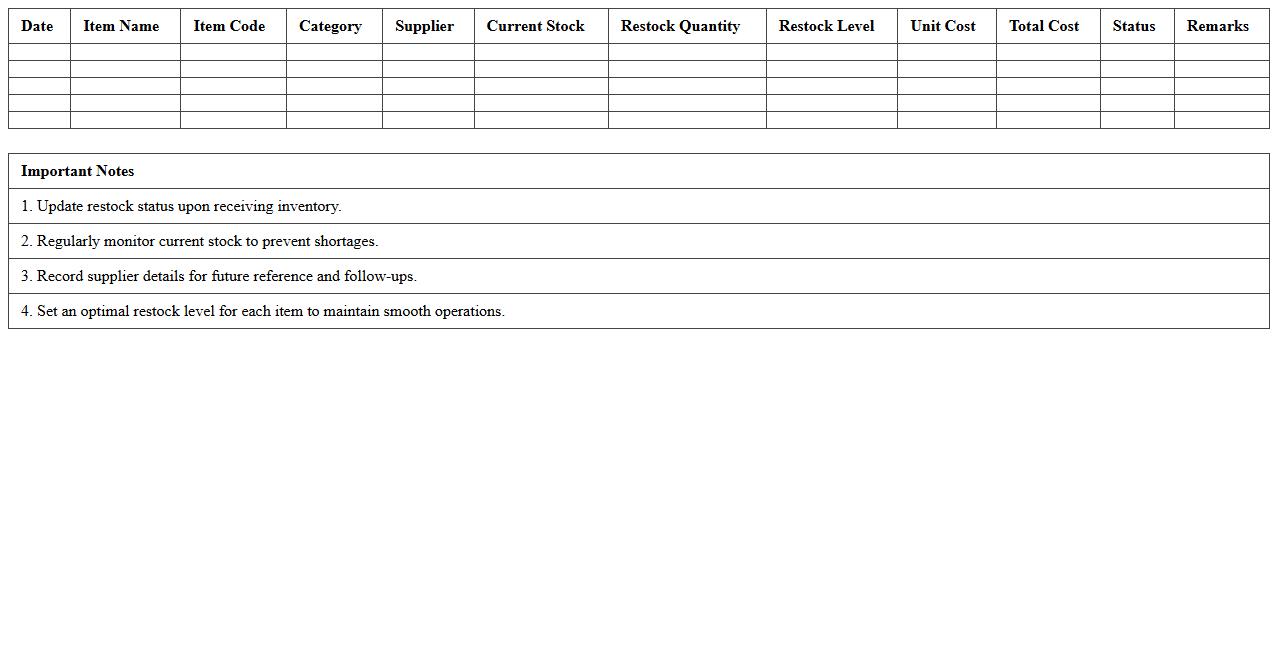
An
Inventory Restocking Management Excel Log document helps track stock levels, reorder points, and supplier details to ensure timely replenishment of products. It streamlines inventory control, reduces stockouts, and improves overall supply chain efficiency by providing real-time visibility into inventory status. Using this log enhances decision-making and minimizes carrying costs by maintaining optimal inventory levels.
Inventory Turnover Analysis Template
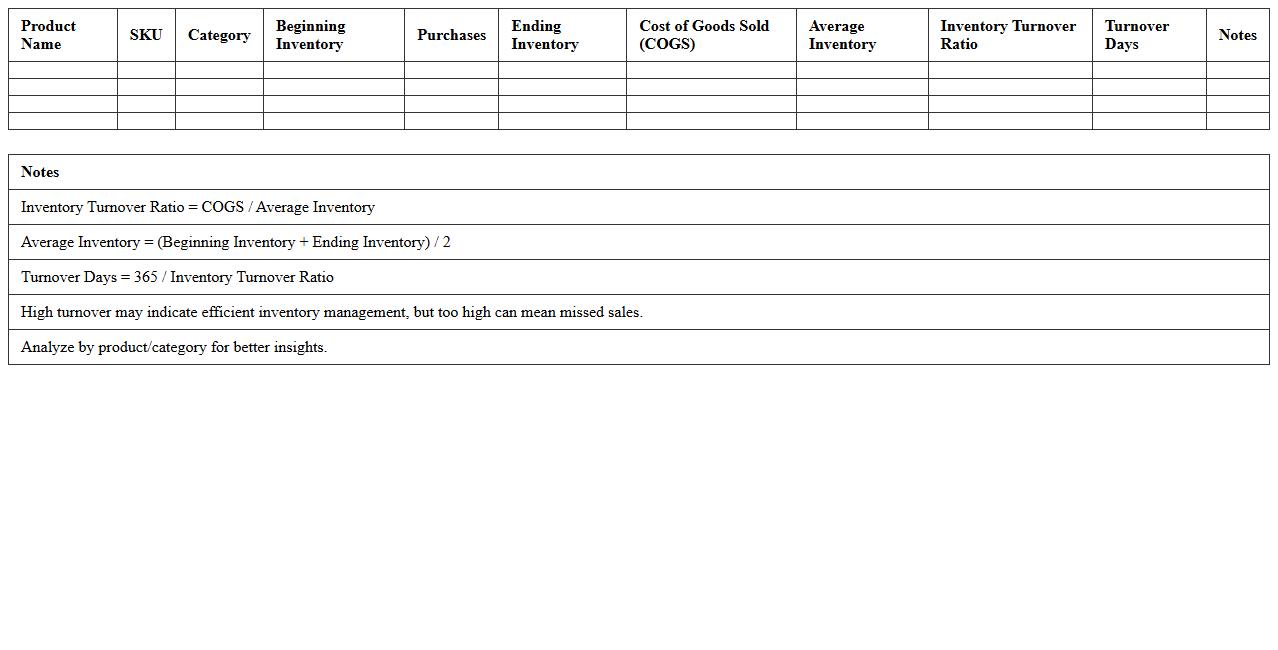
The
Inventory Turnover Analysis Template is a structured document designed to track and evaluate the efficiency of inventory management by calculating how often inventory is sold and replaced over a specific period. It helps businesses identify slow-moving stock, optimize inventory levels, and improve cash flow by reducing excess holding costs. Utilizing this template facilitates informed decision-making, enhances supply chain management, and ultimately increases profitability.
Inventory Request and Fulfillment Tracking Sheet
An
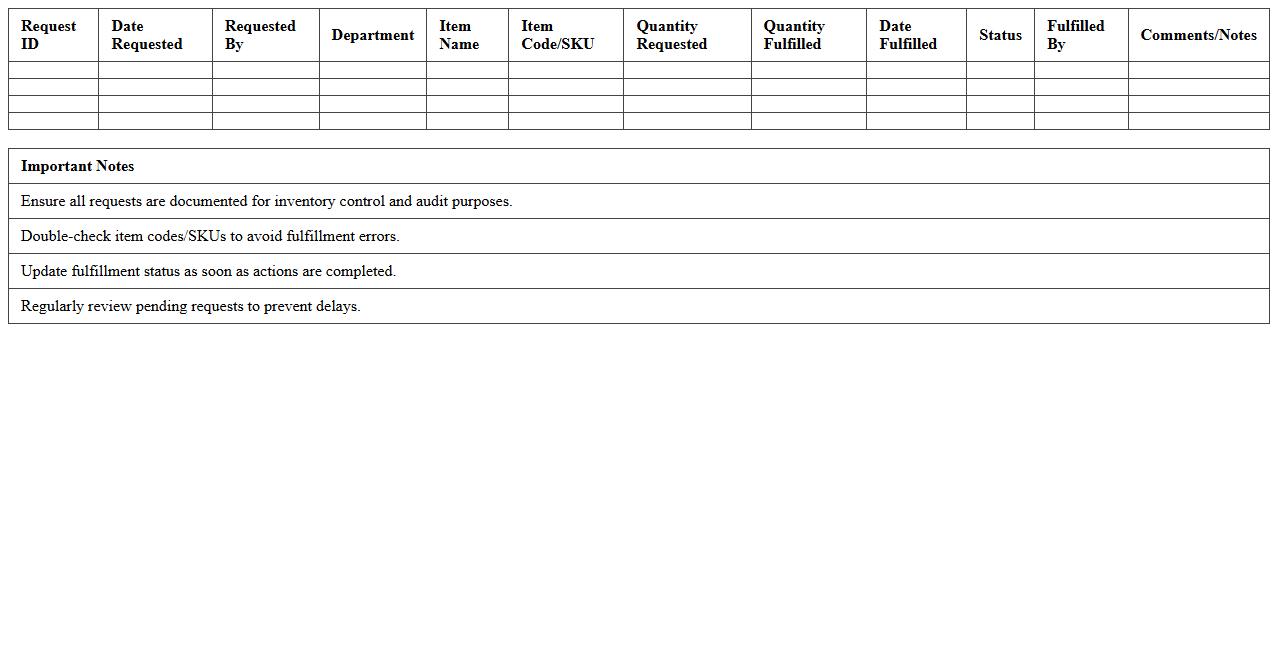
Inventory Request and Fulfillment Tracking Sheet is a document designed to monitor and manage inventory requests, ensuring accurate recording of orders, approvals, and fulfillment status. It helps streamline communication between departments by providing real-time visibility into inventory levels and request progress, minimizing errors and delays. This tool enhances operational efficiency by tracking stock usage, preventing shortages, and supporting timely replenishment decisions.
Transportation Inventory Reconciliation Spreadsheet
A
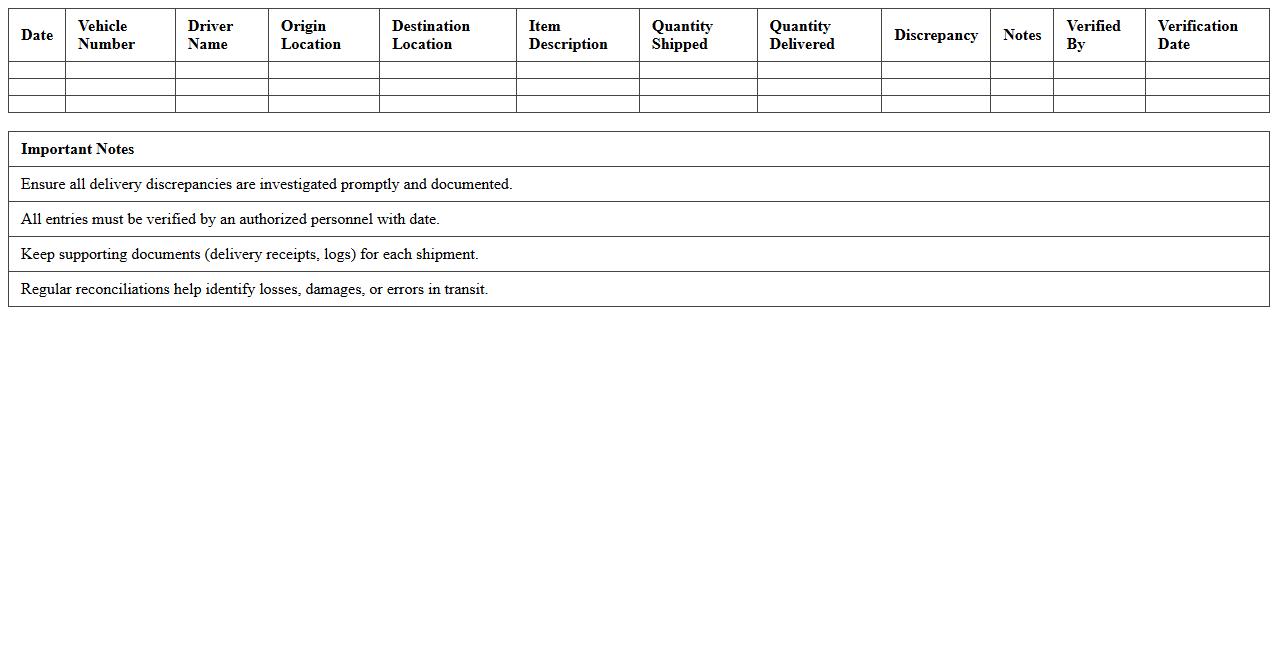
Transportation Inventory Reconciliation Spreadsheet is a detailed document designed to track, compare, and verify transportation-related inventory data, ensuring accuracy between shipped and received goods. It is useful for identifying discrepancies, improving supply chain visibility, and optimizing logistics processes by maintaining up-to-date records of inventory movements. This tool helps businesses minimize losses, reduce errors, and streamline reconciliation efforts in transportation management.
How to automate stock level alerts in Excel for logistics inventory?
To automate stock level alerts in Excel, use the conditional formatting feature combined with logical formulas such as IF. Set up thresholds for minimum stock levels and configure the alerts to highlight cells when inventory falls below these limits. Additionally, create email notifications using VBA scripts to send automated warnings to inventory managers.
What are the best Excel formulas for tracking inbound and outbound shipments?
Essential formulas for tracking shipments include SUMIFS to calculate total quantities based on date and shipment type, and COUNTIFS for counting specific shipment events. Use the IF and ISBLANK functions to manage conditional data entry and handle missing values efficiently. These formulas enable precise monitoring of both inbound and outbound shipments within inventory datasets.
How can VLOOKUP improve supplier document referencing in logistics spreadsheets?
VLOOKUP enhances logistics spreadsheets by linking supplier document references to corresponding shipment or invoice records quickly. It allows for easy retrieval of supplier information from large data tables, improving accuracy and reducing manual errors. Integrating VLOOKUP streamlines reference checks and supports faster auditing processes.
What pivot table layouts optimize SKU movement analysis in inventory management?
Effective pivot table layouts for SKU movement include rows for SKU identifiers, columns for time periods like days or weeks, and values showing quantities moved. Adding filters for warehouses or shipment types allows for granular analysis of stock trends. Such layouts provide dynamic insights into product performance and inventory turnover rates.
How to design barcode tracking columns in an Excel inventory log?
Design barcode tracking columns by allocating cells formatted as text to prevent loss of leading zeros or special characters. Use data validation and input masks to ensure consistent barcode entry formats. Incorporate drop-down lists or scanning options through Excel add-ins to enhance the accuracy and efficiency of inventory tracking.
More Logistics Excel Templates