The Healthcare Revenue Analysis Excel Template for Insurance Providers streamlines the process of tracking and analyzing revenue streams from multiple insurance plans. It offers customizable features for detailed reporting, allowing providers to identify trends, optimize billing strategies, and improve financial performance. This template enhances data accuracy and supports informed decision-making through easy-to-use, comprehensive dashboards.
Insurance Claims Revenue Tracking Excel Template
The
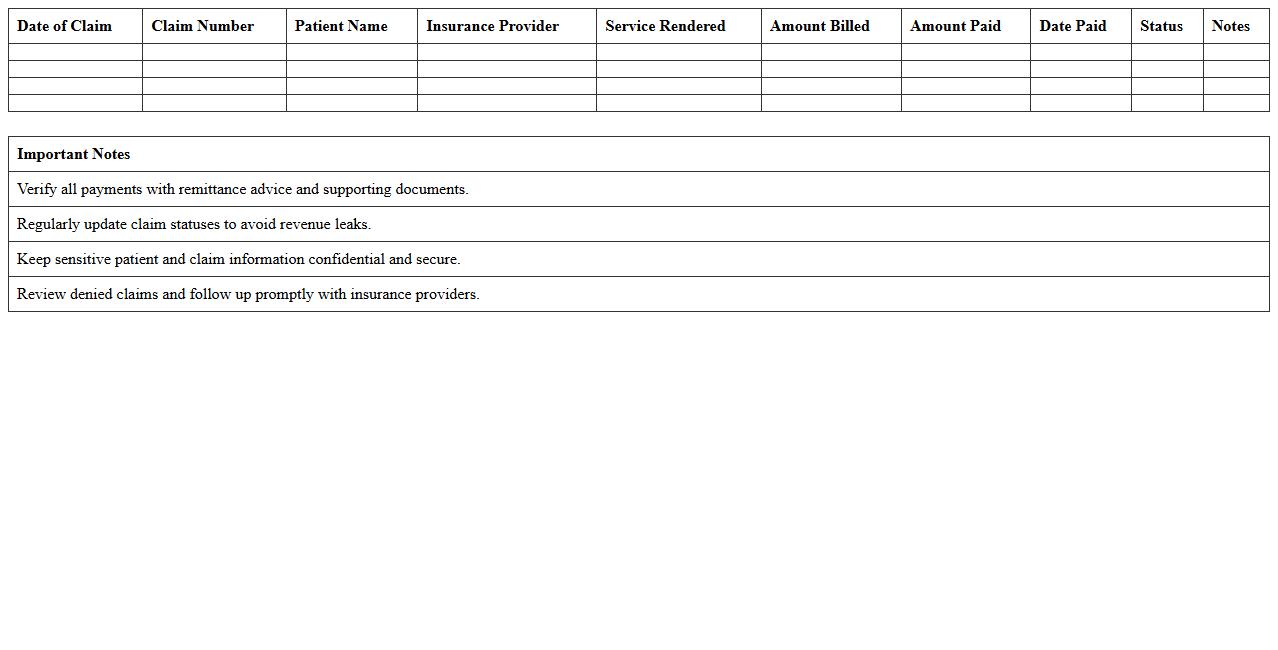
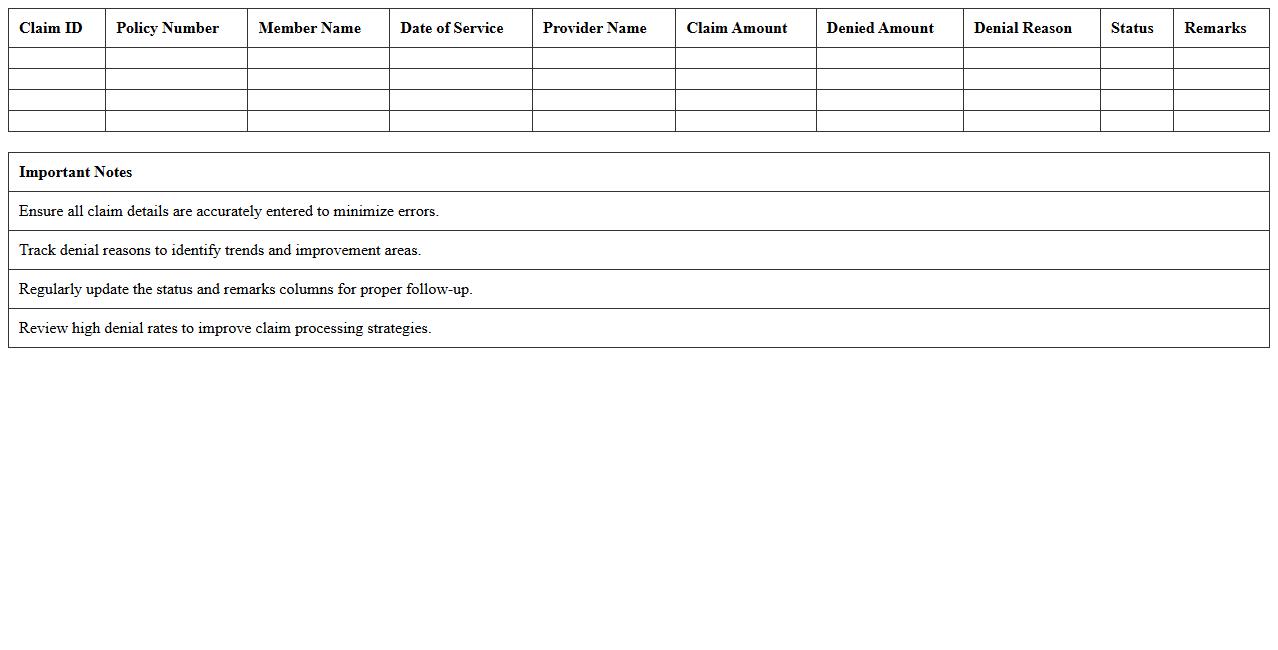
Insurance Claims Revenue Tracking Excel Template document is a specialized tool designed to systematically record, monitor, and analyze revenue generated from insurance claims. It enables businesses to track claim statuses, payment timelines, and outstanding amounts, providing a clear overview of financial inflows related to insurance settlements. Using this template enhances accuracy in revenue management, improves cash flow forecasting, and supports informed decision-making for optimizing insurance claim processes.
Monthly Premium Collection Analysis Spreadsheet
The
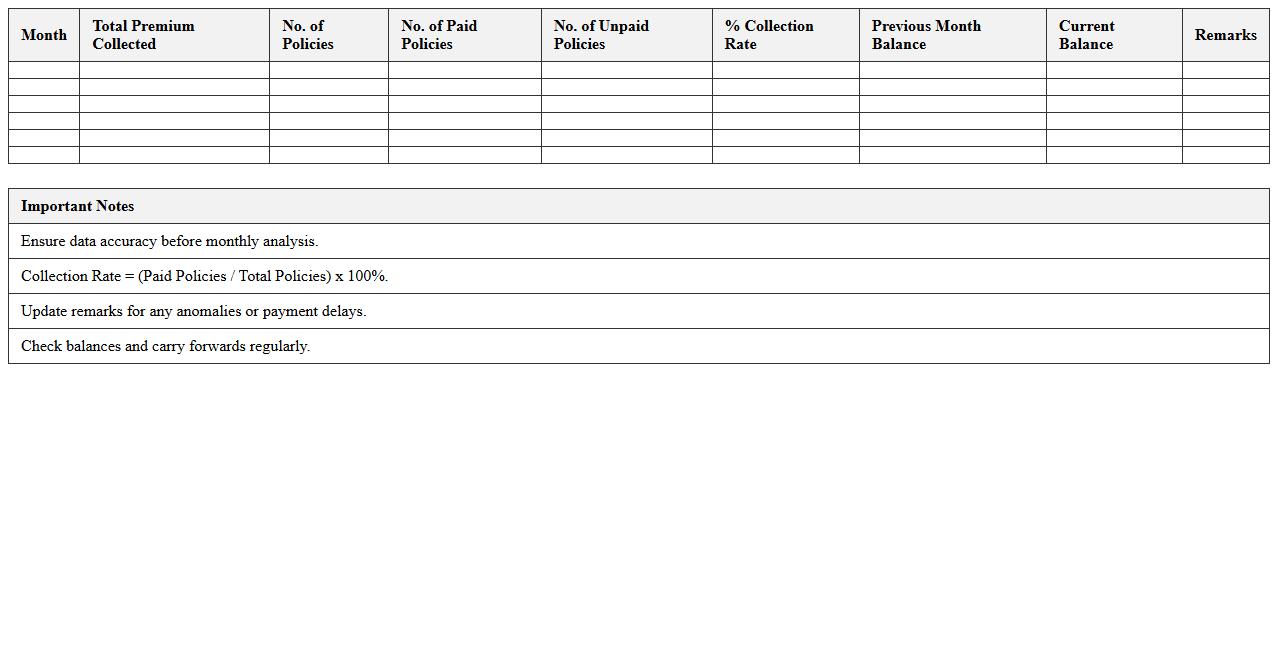
Monthly Premium Collection Analysis Spreadsheet is a detailed financial document that tracks insurance premium payments on a monthly basis, allowing businesses to monitor cash flow and identify payment trends effectively. This spreadsheet helps organizations optimize premium collection processes, detect late or missing payments, and forecast revenue more accurately. By providing clear insights into payment behaviors, it supports decision-making for resource allocation and improves overall financial management.
Patient Billing Revenue Dashboard Excel
The
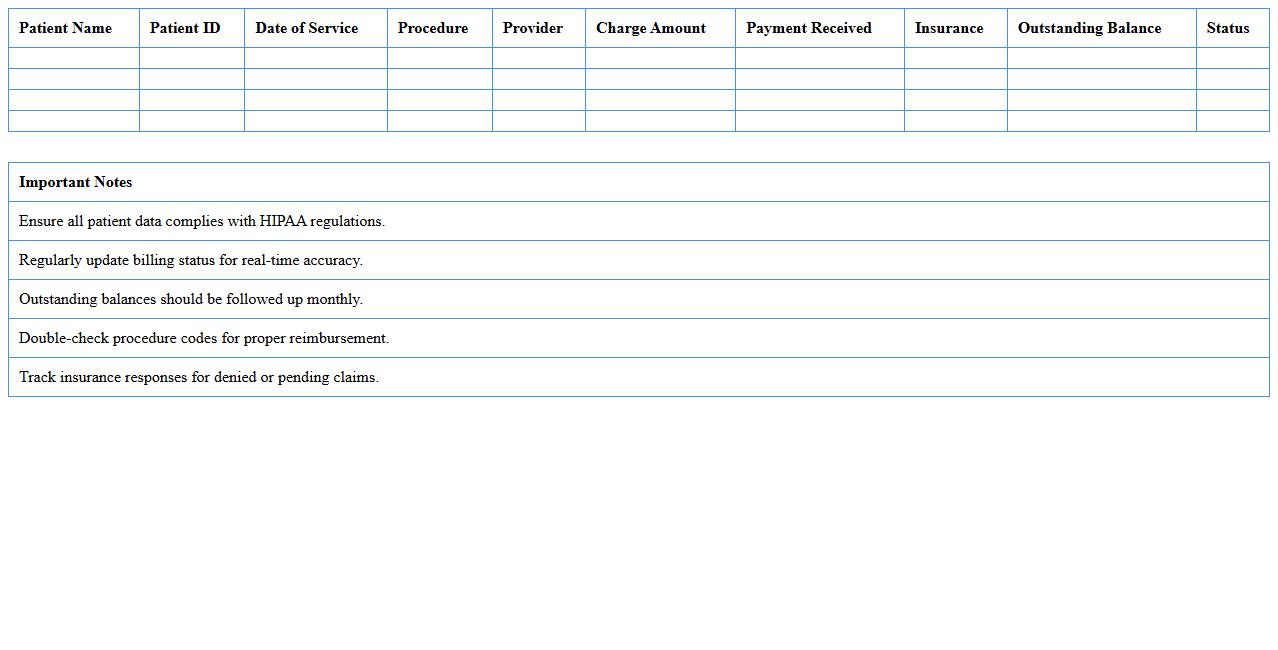
Patient Billing Revenue Dashboard Excel document provides a comprehensive overview of financial data related to patient billing, enabling healthcare providers to track revenue streams accurately. It consolidates billing information, payment status, and outstanding balances, facilitating efficient revenue cycle management. This tool is invaluable for improving financial transparency, identifying trends, and optimizing billing processes to maximize revenue collection.
Healthcare Provider Payer Mix Report Template
The
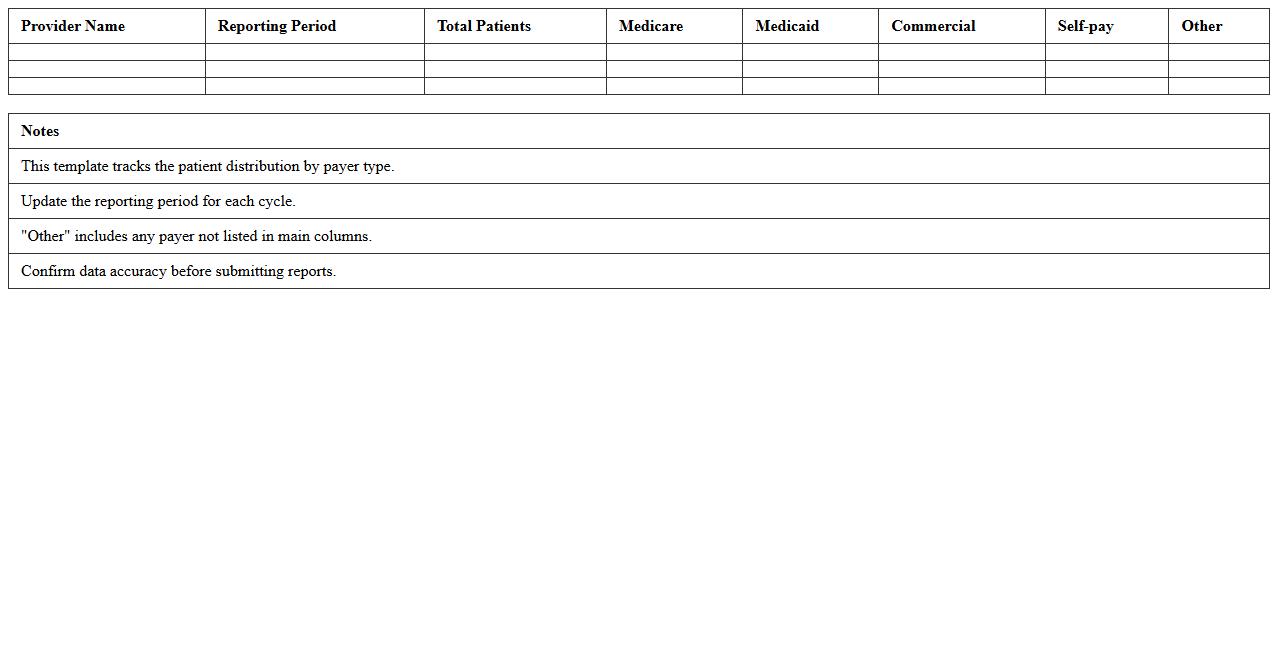
Healthcare Provider Payer Mix Report Template is a structured document designed to analyze and summarize the distribution of revenue sources based on different payers such as insurance companies, government programs, and self-paying patients. This report provides critical insights into the financial performance and payer dependency of healthcare providers, enabling strategic decision-making to optimize billing processes and improve revenue cycle management. By clearly categorizing payer types and associated payment metrics, it helps healthcare organizations identify trends, manage risk, and enhance reimbursement efficiency.
Denial Rate Analysis Excel Sheet for Insurers
The
Denial Rate Analysis Excel Sheet for insurers is a comprehensive tool designed to track and analyze insurance claim denials systematically. It helps insurers identify patterns and root causes of claim rejections, enabling targeted improvements in claims processing and documentation. By utilizing this sheet, companies can reduce denials, optimize revenue cycles, and enhance overall operational efficiency.
Revenue Cycle Management Metrics Excel Template
The
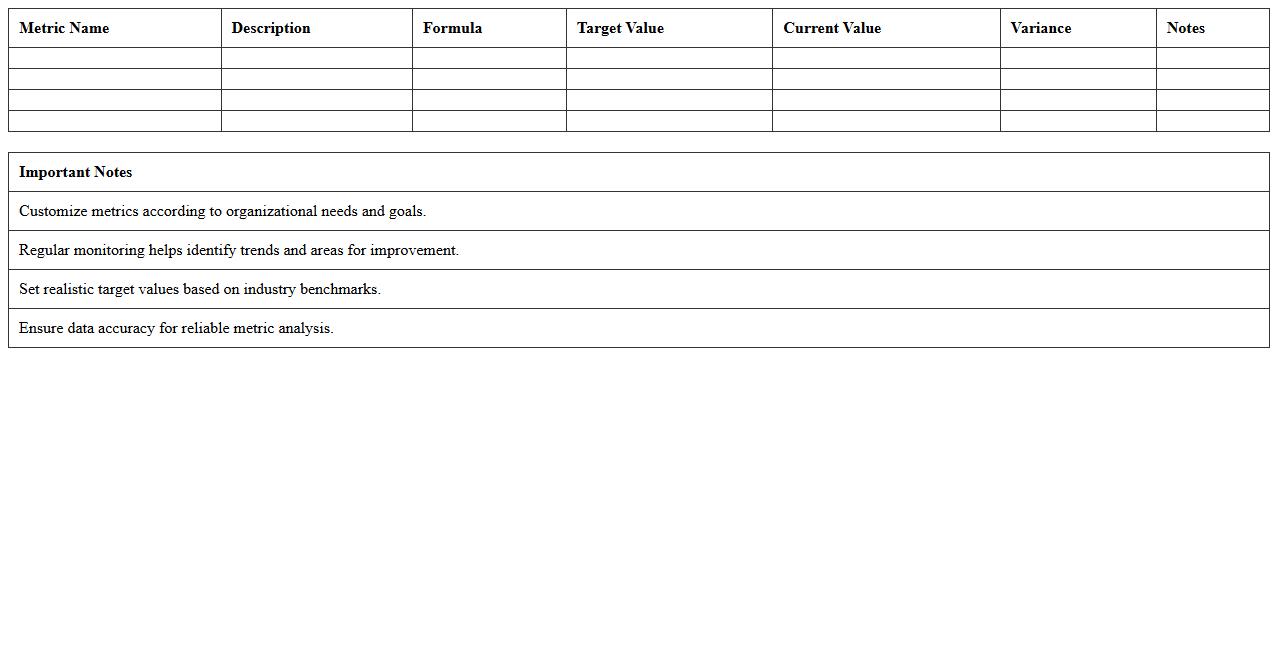
Revenue Cycle Management Metrics Excel Template document is a comprehensive tool designed to track and analyze key financial and operational indicators within healthcare revenue cycles. It helps organizations monitor payment processing times, claim denials, and collected revenue, enabling data-driven decisions to improve cash flow and reduce errors. Using this template streamlines reporting processes, enhances accuracy, and supports strategic planning for optimized revenue performance.
Net Collection Ratio Calculator Excel
The
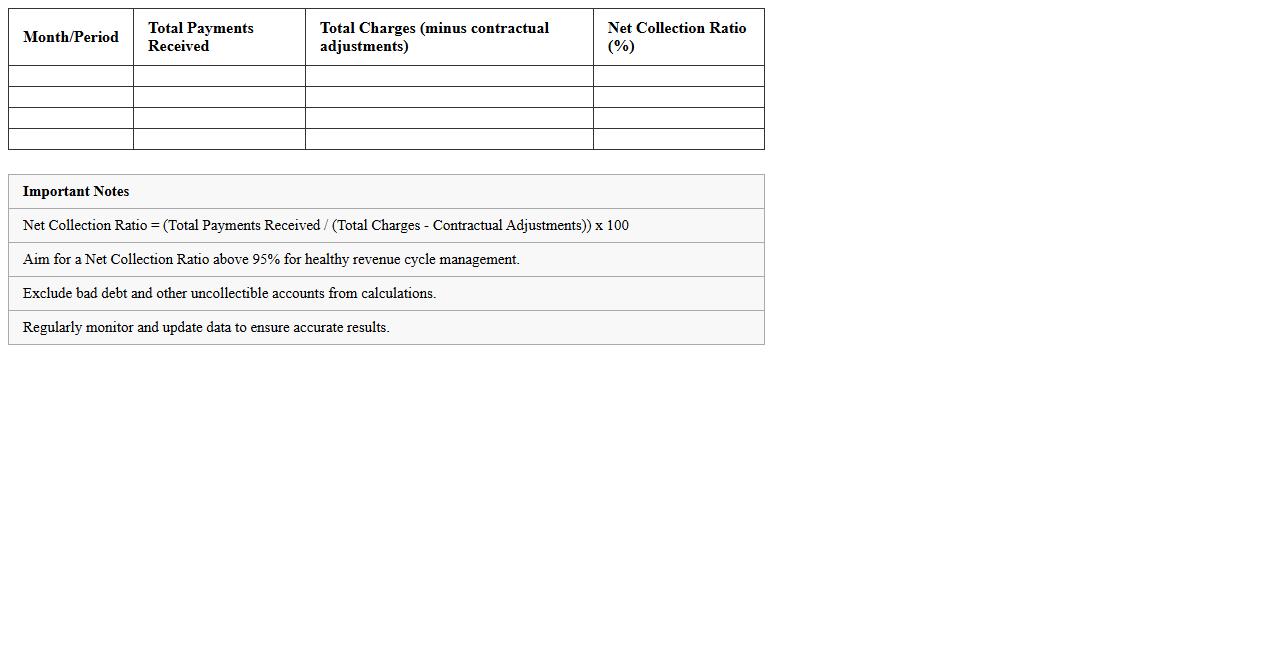
Net Collection Ratio Calculator Excel document is a tool designed to accurately measure the efficiency of revenue collection by comparing collected payments to expected payments within a specified period. It allows businesses, especially in healthcare and finance sectors, to quickly analyze cash flow performance, identify collection issues, and optimize billing processes. Utilizing this calculator helps organizations enhance financial management, reduce outstanding receivables, and improve overall operational profitability.
Insurance Payment Reconciliation Log Sheet
The
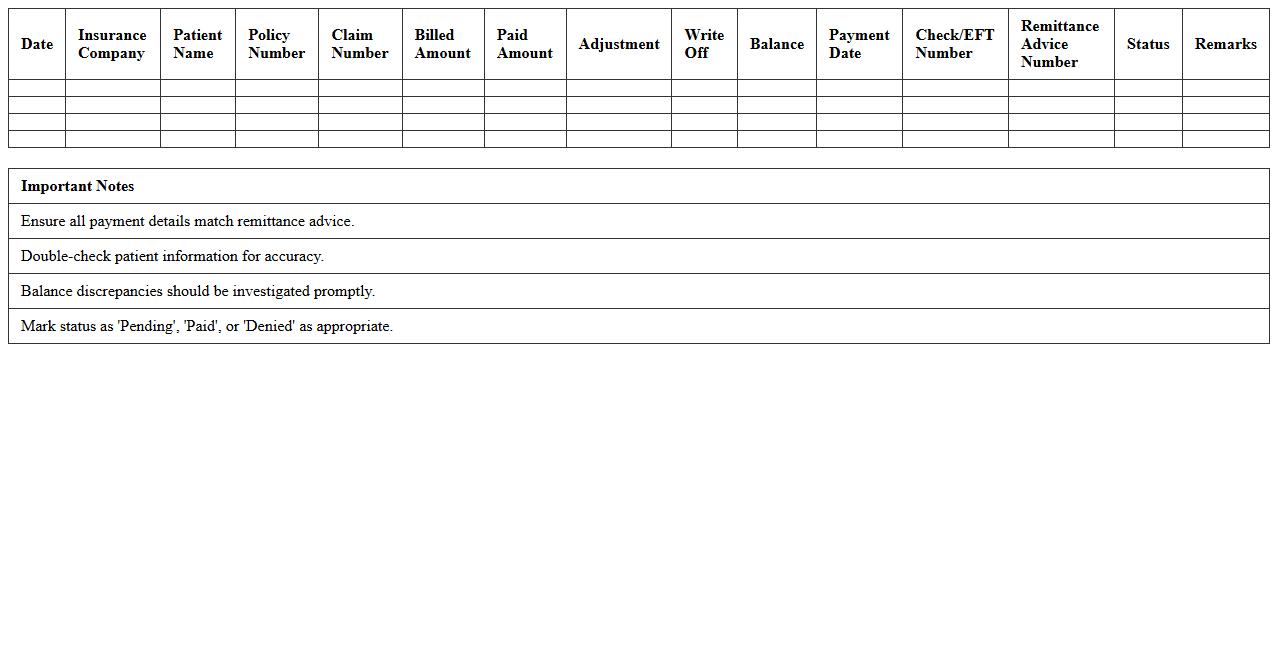
Insurance Payment Reconciliation Log Sheet document is a detailed record that tracks insurance payments received against billed claims, ensuring accuracy and consistency in financial transactions. It aids in identifying discrepancies between expected and actual payments, facilitating prompt resolution of claim denials or underpayments. This log sheet enhances financial management by providing transparent documentation for audits and improving cash flow monitoring in healthcare or business settings.
Insurance Contract Revenue Forecast Template
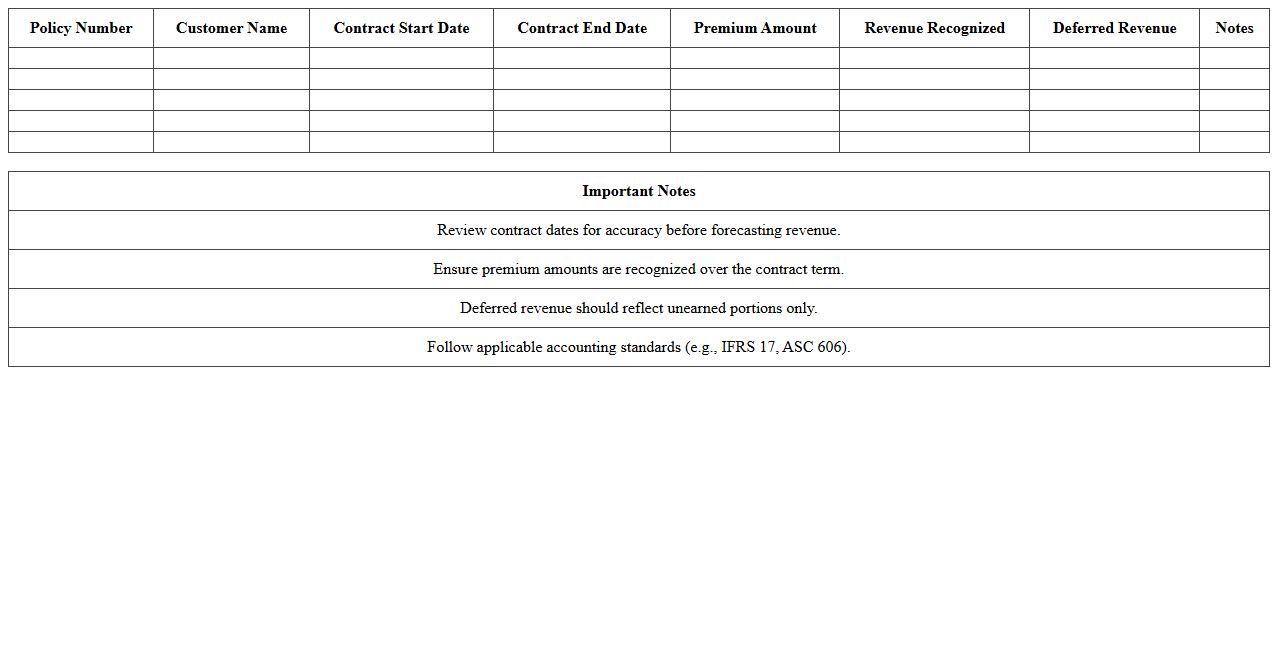
The
Insurance Contract Revenue Forecast Template is a structured document designed to project future revenue streams from insurance contracts based on policy terms, premiums, and anticipated claim patterns. It helps insurance companies accurately estimate upcoming income, ensuring better financial planning, risk assessment, and regulatory compliance. Using this template optimizes decision-making by providing clear insights into revenue trends and cash flow management.
Revenue by Payer Source Analysis Excel Spreadsheet
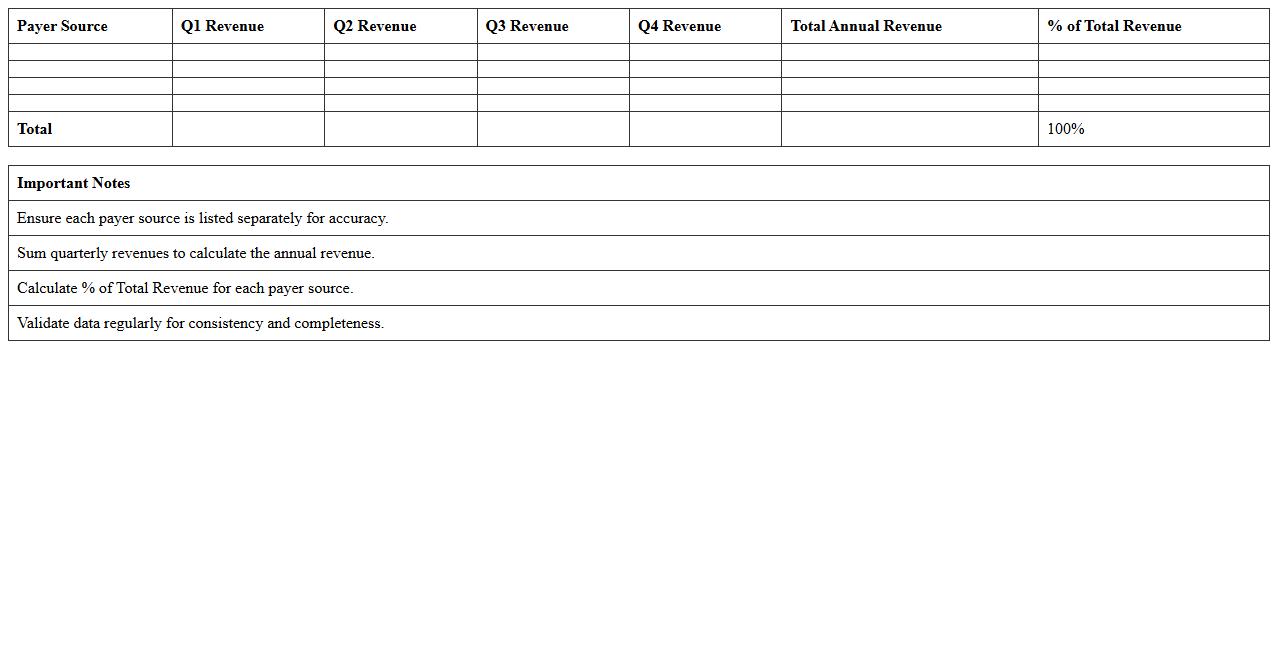
The
Revenue by Payer Source Analysis Excel Spreadsheet document is a data management tool designed to track and analyze income generated from various payer sources, such as insurance companies, government programs, and private payers. It helps organizations identify trends, compare revenue streams, and pinpoint areas for financial improvement by organizing payment data into an easily interpretable format. This analysis supports strategic decision-making, revenue optimization, and efficient resource allocation within healthcare or service-based businesses.
How can Excel track denied insurance claims by provider in healthcare revenue reports?
Excel can efficiently track denied insurance claims by provider using pivot tables to organize data by provider and claim status. Conditional formatting highlights denied claims quickly, allowing for immediate visual identification. Additionally, using filters and COUNTIF functions helps in quantifying the number of denials per provider for accurate reporting.
What formulas best analyze revenue variance by insurance plan in document letters?
The SUMIFS formula is essential for analyzing revenue variance by insurance plan, enabling detailed summation of revenue by specific criteria. The VAR.P function can calculate variance to assess fluctuation within insurance plans accurately. Combining these formulas provides a comprehensive view of revenue differences across plans for better financial insights.
How to automate aging analysis of insurance receivables in Excel for revenue letters?
Automating aging analysis requires using the DATEDIF function to calculate the age of each receivable from the invoice date to the current date. Applying IF statements categorizes receivables by aging buckets such as 30, 60, and 90 days. This automation streamlines generating aging reports for revenue letters, improving collection follow-up efficiency.
Which Excel features summarize payment trends by insurance type in revenue communications?
Pivot tables are the most powerful feature to summarize payment trends by insurance type, allowing dynamic grouping and filtering of payment data. Charts and slicers enhance visualization of these trends, providing clear insights in revenue communications. Additionally, the GROUP BY function organizes data into meaningful categories, making trend analysis more accessible.
How to present CPT code reimbursement rates in a document letter using Excel data?
Excel tables provide a structured format to list CPT codes alongside corresponding reimbursement rates for clear presentation in document letters. Using lookup functions like VLOOKUP or INDEX-MATCH fetches accurate reimbursement data smoothly for each CPT code. Formatting the data with currency and borders enhances readability and professionalism in the reimbursement report.
More Healthcare Excel Templates